
London Medical Cardiology
Echocardiogram (ECG) tests
London Medical’s Cardiology Clinic provides the most up-to-date investigative cardiac procedures for patients with heart problems – and some of the UK’s most renowned cardiologists hold clinics here for all aspects of heart disease.
Comprehensive cardiac testing to identify heart disease at an early stage
London Medical offers cutting-edge cardiac investigations, so that cardiovascular disease can be diagnosed early and treated effectively.
London Medical’s cardiac consultants are world-leaders in the diagnosis, treatment and prevention of heart disease. Whether you are worried about symptoms, have a family history of cardiovascular problems or are concerned about your risk factors for coronary artery disease, the clinic’s specialists can investigate your heart health and provide treatment and support to help you protect your future wellbeing.
Cardiac testing at London Medical
London Medical’s state-of-the-art cardiology clinic offers the latest investigative procedures to assess heart rhythm, structure and function. Some of the UK’s most renowned cardiologists provide expert assessment and treatment, supported by a team of dedicated cardiac nurses, ultrasound specialists, and physiology technicians.
London Medical offers cutting-edge cardiac investigations, so that cardiovascular disease can be diagnosed early and treated effectively.
London Medical’s cardiac consultants are world-leaders in the diagnosis, treatment and prevention of heart disease. Whether you are worried about symptoms, have a family history of cardiovascular problems or are concerned about your risk factors for coronary artery disease, the clinic’s specialists can investigate your heart health and provide treatment and support to help you protect your future wellbeing.
What is ECG testing?
ECG stands for electrocardiogram. It is a quick, simple and non-invasive test which records the heart’s rate, rhythm and electrical activity.
ECG testing takes place in the comfort and privacy of the London Medical outpatient clinic. An ECG is usually one of the first tests performed at the clinic, it can provide useful information; however, further, more detailed cardiac investigations are usually also required.
Sticky patches are attached to your chest, arms and legs. These electrodes are connected with wires to the ECG machine. The device picks up the heart’s electrical activity and prints the trace onto paper for analysis. The test is painless and only takes a few minutes.
The ECG can help your consultant identify abnormalities with your heart’s rate or rhythm. It can also show if you’re having a heart attack or if you’ve previously had a heart attack.
London Medical offers different types of ECG tests to investigate your heart over a prolonged period or to assess its activity when it is being stressed during exercise.
Ambulatory ECG or Holter monitoring
Ambulatory ECG monitoring can be used to record your heart’s electrical activity over 24 to 48 hours. It can help identify abnormalities in the heart's activity that may be intermittent such as episodes of atrial fibrillation or skipped beats.
Three sticky electrodes are attached to your chest and connected to a small portable recording device. The recorder is worn on a belt around your waist for 24-48 hours before being returned to London Medical for expert analysis. You can be fully mobile and able to get on with normal life, however you should avoid getting the device wet so no bathing, swimming or showering is allowed.
What is an echocardiogram?
An echocardiogram, called an ‘echo’ for short, is a type of ultrasound scan of the heart. It’s a painless, safe and non-invasive test that uses sound waves to create a moving image of your heart.
The specialist sonographers can visualise the structures within your heart, so that any congenital abnormalities, defects in the walls or valve problems can be identified.
An echo may be arranged if you have heart failure or following a heart attack. The scan provides detailed information about your heart’s function and how well it is pumping blood. The sonographer can measure the amount of blood that is pumped out of the left ventricle in the heart with each beat. This ‘ejection fraction’ is expressed as a percentage, with anything over 50 percent of the blood considered normal.
What to expect from an echocardiogram at London Medical
Echo testing takes place in the comfort and discretion of the London Medical outpatient clinic. You will be positioned on a couch and given a hospital gown so that the sonographer can apply the probe to your chest wall.
The sonographer will move the probe over your chest to see different parts of your heart. Gel is applied to the device to aid sound wave transmission. It may feel cold and sticky, but should be completely pain-free. The whole procedure takes between 15 minutes and an hour.
Depending on your history and examination results, your cardiology consultant may arrange specialist echocardiograms to provide more detailed information.
Specialist echocardiograms at London Medical
Transoesophageal echocardiogram (TOE)
A transoesophageal echocardiogram scans the heart from your oesophagus or gullet. This can provide clearer images because the probe gets nearer certain structures in the heart.
A local anaesthetic spray is used to numb your throat and you will be offered a light sedative to help you relax. You will then be asked to swallow a fine probe, which will provide close up images of your heart.
Stress echocardiogram
A stress echo can help identify coronary heart disease. It is performed when the heart is beating faster. The procedure is carried out while you are exercising on a treadmill or exercise bike. If you are unable to exercise because of illness or injury, the heart rate can be raised with medication.
Bubble echocardiogram
A bubble study is an echo designed to identify holes in the heart. A small volume of saline is injected through one of the veins in your arm into your bloodstream.
Tiny bubbles within the saltwater can be seen on the scan images so that defects in the heart walls (either congenital or following heart attack or surgery) can be located.
Expert analysis and treatment
The ECG or echo test is just the first step; the expert physicians at London Medical can help you understand the results, explain your personal heart health and work with you to make changes to prevent heart disease, stroke, and premature death.
Frequently Asked Questions
ECG and standard echocardiograms are painless and do not require sedation or anaesthetic. A transoesophageal echo requires a local anaesthetic spray to numb the throat. A light, short-acting sedative will also be offered, however many people prefer to have the test without any medication.
ECG testing is totally painless and quick. During an echo you will feel some pushing and pressure and the gel is cold and sticky, however, it should be a pain-free.
For your transoesophageal echo, you should have an empty stomach. It’s important not to eat on the day of the procedure. The food and drink guidance will depend on the time of your investigation, the specialist team at London Medical will provide individual advice on what you can eat and drink and when.
Our Consultants
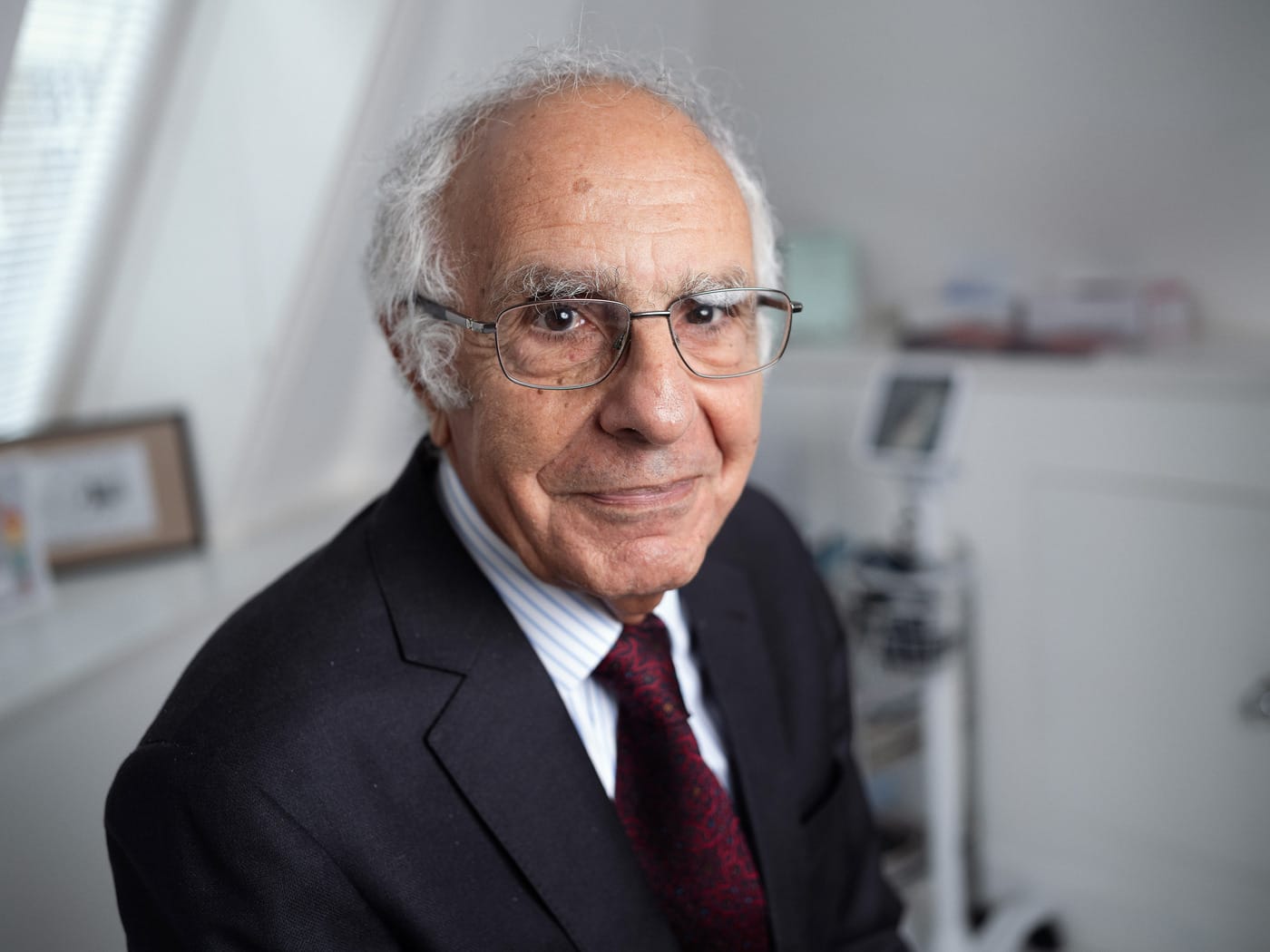
Dr Ralph Abraham
Dr Ralph Abraham, a founder of London Medical, specialises in diabetes, weight management, endocrinology and cholesterol.

Dr Afshin Alavi
Clinical director of radiology in Imperial College NHS Trust and a honorary senior lecturer at Imperial College London.

Dr Rakesh Amin
Clinical lead for endocrinology and diabetes at Great Ormond Street Hospital. His clinical practice encompasses all areas of paediatric and adolescent endocrinology and diabetes.

Dr George Amin-Youssef
Consultant cardiologist who deals with adults and specialises in heart failure, including advanced heart failure, working in one of the largest heart failure units in the UK.

Mr Mohiemen Anwar
ENT surgeon specialising in all aspects of ENT surgery for adults and children.

Mr Asit Arora
Consultant ENT and head and neck surgeon, specialising in minimally invasive head and neck surgery.

Professor Atul Gupta
Consultant respiratory paediatrician, specialising in breathing problems such as asthma and lung diseases.

Mr Zaid Awad
Consultant otolaryngologist who specialises in treating conditions that affect the ears, nose, and throat, as well as head and neck surgery.

Miss Anna Bhan
Consultant ophthalmic surgeon with specialist expertise in cataract and glaucoma surgery. Also deals with general ophthalmology and many other eye conditions.

Dr Kunwar Bhatia
Consultant head and neck radiologist at London Medical.
Our Cardiology specialties
We offer care across a broad range of cardiology specialties. We have some of the top specialists in every aspect of cardiac care. Our entire team is dedicated to working together to consider the results of your investigations, your health and your lifestyle before tailoring a treatment plan to your individual needs.
Coronary artery disease (CAD) is a type of cardiovascular condition in which the vessels that supply blood to the heart become constricted by fatty deposits. The buildup of these fatty deposits is called atherosclerosis. CAD is commonly referred to as coronary heart disease, which is the most common form of heart disease
Symptoms
Conditions
Tests
Echocardiogram (inc. trans-thoracic and stress echo)
Cardiac MRI
Resting ECG
Treatments
Percutaneous coronary intervention
Heart failure is a long-term condition in which the heart is unable to pump blood throughout the body as it should. Your body depends on the heart to supply oxygen-rich and nutrient-rich blood to the body’s cells.
Symptoms
Breathlessness (when walking up hill/stairs/upon exercise)
Conditions
Heart failure
LV fibrosis
Tests
Echocardiogram (inc. trans-thoracic and stress echo)
Resting ECG
Treatments
Implantable cardioverter-defibrillator (ICD)
Cardiac Resyncronicization Therapy (CRT)
Your heart has four heart valves that control the flow of blood in one direction. If you have valvular heart disease, it means one or more of these valves are not working as they should. This can cause problems with your blood flow, putting extra strain on your heart to work harder.
Symptoms
Breathlessness (when walking up hill/stairs/upon exercise)
Conditions
Aortic/Heart valve disease/stenosis (inc. Mitral valve regurgitation)
Tests
Echocardiogram (inc. trans-thoracic and stress echo)
Resting ECG
Holter ECG
Exercise test
Treatments
TAVI
SAVR
Mitraclip
Valve replacement/reconstruction
Your heartbeat is controlled by electrical impulses. It’s normal for us to experience changes in our heartbeat at different times of the day depending on our activities. But if you have an arrhythmia, it means that the electrical activity that controls your heartbeat is affected.
Symptoms
Palpitations
Dizziness
Syncope
Conditions
Heart/AV Block
Tachycardia (inc. Ventricular Tachycardia (VT runs) and Superventricular tachycardia)
Bradycardia
Tests
Resting ECG
Holter ECG
Echocardiogram (inc. trans-thoracic and stress echo)
Treatments
Beta blockers
Cardioversion
Pacemaker
Anticoagulants
Cardiac ablation
ICD implantation
Blood pressure is the pressure of your blood pushing against your arteries. Your blood pressure naturally goes up and down throughout the day. Hypertension is the medical term for when your blood pressure numbers are consistently too high.
Symptoms
Unusual Hypertension
Renal artery stenosis
Endocrine hypertension
Ordinary hypertension
Tests
Echocardiogram (inc. trans-thoracic and stress echo)
24h Ambulatory Blood Pressure Monitoring
Treatments
Diet:
Low salt DASH diet
Drugs:
Calcium channel blockers
ACE-inhibitors
Beta blockers
Renal nerve ablation for severe resistant hypertension
Cholesterol is a fatty substance in our blood that is produced naturally in our liver. It is essential for your body’s normal functioning – it is used by our cells to make some hormones and vitamin D. Cholesterol can also be found in the foods we eat. Over time, if your blood cholesterol levels are too elevated, it can pose a serious risk to your health.
Symptoms
None
Conditions
Monogenic Familial hyperlipidaemia
Polygenic hyperlipidaemia
Dyslipidaemia (low HDL, high LDL, raised triglyceride)
Familial combined hyperlipidaemia
Rare lipid disorders
Tests
Advanced lipoproteins (NMR lipoproteins, oxidised LDL cholesterol, lipoprotein (a))
Coronary calcium score
Our Locations
London Medical is located in the Harley Street medical area. Together with top experts across a range of multi-disciplinary fields, we offer the finest facilities for your care, all under one roof.
Monday to Friday 8.30am to 8pm
Monday to Friday 8.30am to 8pm
Monday to Friday 8.30am to 8pm
Speak to a member of our team

Get in touch
If you have any questions or want to book an appointment, please speak to our team on +44 (0)800 0483 330.
Or, make an enquiry online using this form and one of our team will be in touch. Please note, all the information collected is required as part of our registration process. By using this form you agree with the storage and handling of your data by our team. You don't need a referral from your GP to make an appointment with us.
Contact us
Our team can also be contacted on +44 (0)800 0483 330.
Please note, all the information collected is required as part of our registration process. By using this form, you agree with the storage and handling of your data by our team.
Heart Health News
Find out the latest news, thinking and insights from our experts. Our Heart Health News is your go-to source of trusted advice and knowledge on all matters of the heart.

Chest pain and how it may be avoided

6 ways to prevent heart disease