


Are you worried about chest pain that comes and goes when doing physical activities such as walking uphill or climbing stairs? Or perhaps your family has a history of heart attack and you are worried about your personal risk. Chest pain is a common warning sign of coronary artery disease, but just as often, you might not experience any symptoms. Coronary artery disease is one of the leading causes of heart attack. That’s why early detection and treatment are critical.
Coronary artery disease (CAD) is when the vessels that supply blood to the heart become constricted by fatty deposits. The buildup of these fatty deposits is called atherosclerosis. CAD is commonly referred to as coronary heart disease, which is the most common form of heart disease.
The heart muscles need oxygen to pump effectively. When fatty plaques build up on the walls of the arteries, they become progressively narrower. This reduces the flow of essential blood and oxygen to the heart muscles. When the blood flow is restricted, the heart muscles can cramp, causing chest pain, or angina.
Coronary artery disease develops over the course of decades. Over time, it can weaken the heart. If untreated, it can lead to heart attack, stroke and heart failure, a serious condition where the heart can’t pump blood the way it should.
Whether you’re worried about chest pain or your family history of heart disease, we offer cutting-edge cardiac investigations to diagnose your risk of coronary artery disease
Our approach to heart health
The most commonly experienced symptom of coronary artery disease is angina. Angina is a condition caused by the narrowing of the arteries due to fatty buildups of plaque. Chest pain is a result of restricted blood flow to the heart and other parts of the body. It can feel dull, heavy or tight across the chest. The pain may be triggered by stress or exercise and may spread into your arm, neck, jaw or back. The pain of angina should stop after resting for a few minutes.
Other symptoms might include:
- Breathlessness
- Pain or discomfort in the arm or shoulder
- Heart attack
A heart attack can happen without any previous warning signs or symptoms. You should immediately call 999 if you develop sudden pain in your chest that:
- Feels tight, heavy or crushing
- Continues for more than 15 minutes
- Spreads into the arms, neck, jaw or through to the back
- Is associated with breathlessness, clamminess, sweating or your heart racing
- Makes you feel unwell, weak or nauseous
 Prompt treatment can prevent heart damage and could save your life.
There are several risk factors that can increase your chance of developing coronary artery disease. These include:
- Smoking
- Being overweight or obese
- Your age
- Your family history
- Hypertension (high blood pressure)
- Diabetes
- High cholesterol
Although you can’t control some factors like your age or your family history, a healthy lifestyle can help lower your risk of developing coronary artery disease.
Our state-of-the-art cardiology clinic offers the latest investigative procedures to identify coronary heart disease. Depending on your symptoms, your examination and your health, investigations could include:
Electrocardiogram (ECG) - This simple, non-invasive test that records your heart’s rate, rhythm and electrical activity. It’s also called a resting ECG.
Echocardiogram - An echo for short, this test uses ultrasound waves to create a moving image of your heart
Exercise stress test - This ECG test is conducted while you exercise, such as walking on a treadmill or using an stationary bike
Cardiac MRI - this non-invasive test uses an MRI machine to create magnetic and radio waves to show detailed pictures of the inside of your heart
Carotid artery ultrasound - Scanning the carotid artery in the neck is an effective, low-radiation way of measuring the lining thickness and the size of any fatty plaques. Ambulatory blood pressure monitoring
Holter monitoring - Also called ambulatory ECG monitoring, this is a small, wearable device that is used to record your heart’s electrical activity over 24-48 hours.
CT angiography - A computed tomography (CT) scan is a non-invasive imaging test that looks at the coronary arteries for calcium buildup and plaque.
Coronary angiography - During a minimally invasive investigative procedure called cardiac catheterisation in which a thin, flexible tube is inserted into the artery via the groin, arm or neck, X-rays and contrast dye are used to take detailed pictures of the coronary arteries.
We believe that any treatment for coronary artery disease needs to start with a comprehensive look at your whole health. Coronary artery disease often goes hand-in-hand with other chronic conditions like hypertension and diabetes so it’s important to diagnose any underlying conditions and carefully treat and manage them.
Your consultant will create a customised plan designed around your needs. This could include setting up a plan of support to help you improve your lifestyle, prescribing medication and referring you for any surgical procedures to improve the blood supply to your heart.
Lifestyle changes
You can do a lot to reduce the buildup of fatty deposits in your arteries and protect your heart. Healthy lifestyle changes include:
- Quitting smoking
- Exercising regularly
- Eating a balanced diet
- Maintaining a healthy body mass index (BMI)
As part of the London Medical family, our cardiology clinic has access to various specialties - all under one roof. So whether you’re in need of a personalised weight management programme, expert nutritional advice or support with quitting smoking, we can help look after your whole health.
Medications
Your specialist may prescribe several different types of medication to control any pain, support the work of your heart and optimise your health. These could include:
- Nitrates and Ranolazine to ease chest pain
- Statins and Ezetimibe to reduce levels of ‘bad’ cholesterol in the blood
- Antiplatelet drugs (blood thinners) to thin the blood and reduce the risk of clot formation and heart attack
- Beta blockers to improve blood flow and slow the heart rate
- Calcium channel blockers to relax the muscles in the artery walls and reduce blood pressure
- Angiotensin-converting enzyme (ACE) inhibitors or angiotensin II receptor blockers to improve the blood flow and reduce blood pressure
- Ranolazine for chronic angina
- Injectable cholesterol lowering drugs called PCSK9 inhibitors
You should always carefully follow the instructions of your consultant when taking your medications and be sure to speak to your doctor before you stop taking any medication.
Interventional procedures and surgery
If you need more aggressive treatment to improve blood flow and decrease plaque buildup, your specialist might suggest an invasive procedure or surgery.
Coronary angioplasty is a minimally invasive procedure to relieve blockages in the coronary arteries. It can be performed as an emergency measure to relieve a sudden blockage or can even be performed during a scheduled coronary angiogram procedure. Through a blood vessel in the groin, a device is inserted into the blocked coronary vessel. The specialist physician inflates a balloon to open up the narrowed area of the artery, then precisely places a stent in the artery to keep it open and maintain the blood flow. At London Medical, we also offer innovative new stents that slowly release medication to stop the artery from narrowing.
Coronary artery bypass graft (CABG) can help when the arteries are significantly narrowed. The specialist cardiothoracic surgeon grafts a new blood vessel to supply blood to the heart muscle, bypassing the blocked artery.
Meet our experts in coronary artery disease

Dr George Amin-Youssef
Consultant cardiologist who deals with adults and specialises in heart failure, including advanced heart failure, working in one of the largest heart failure units in the UK.

Professor Carlo Di Mario
Specialist in Interventional cardiology – the use of catheters and other devices to restore blood flow to the heart without major surgery.

Dr Claire Chalmers-Watson
Dr Chalmers-Watson is an experienced General Practitioner with over two decades of experience in primary care and a profound expertise in managing a broad spectrum of health conditions.

Professor Piers Daubeney
Professor Piers Daubeney is a consultant paediatrician at London Medical, specialising in paediatric cardiology.

Dr Shouvik Haldar
Consultant Cardiologist and Electrophysiologist at the Royal Brompton and Harefield Hospitals with a specialist interest in the management of patients with abnormal heart rhythms.
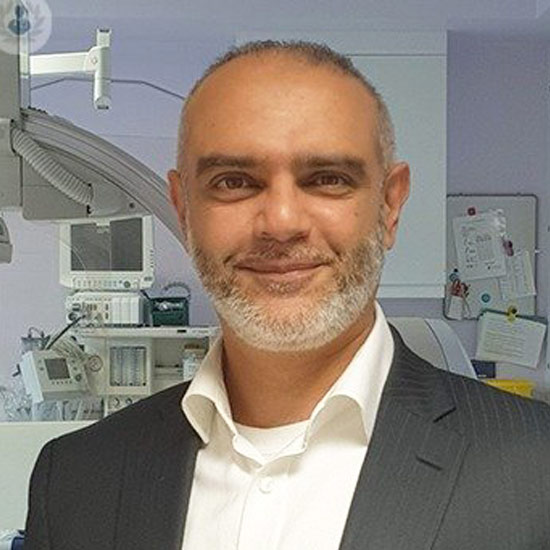
Dr Riyaz Kaba
Consultant cardiologist and electrophysiologist, specialising in arrhythmias, ablations, and pacemakers.

Professor Thomas F. Lüscher
Consultant in cardiology, interested in interventional cardiology, rhythmology, echocardiography, heart failure, acute cardiac care, and sports cardiology.

Dr Khaled Mallek
An esteemed consultant interventional and general cardiologist, specialising in complex coronary interventions and chronic total occlusions.

Dr Nikolaos Papageorgiou
Dr Nikolaos Papageorgiou is a consultant cardiologist at London Medical, specialising in heart failure and electrophysiology.

Professor Kausik Ray
Consultant preventative cardiologist, specialising in diabetes, lipids, glucose, hypertension and cardiometabolic traits.
Simon’s story

“
My advice to anybody who has had a heart attack is not to simply think that that’s the end. Life can continue on normally afterwards
Simon B - 71, is a dedicated football player. When he had a heart attack, he feared he’d have to quit his favourite game.
Are you worried because someone in your family has suffered a premature heart attack? Are you aware of your cholesterol numbers? Whether you are concerned about managing your risk of heart attack or stroke or you just want to ensure you can enjoy your years of retirement, our comprehensive heart assessment plan can help you identify and manage your risk of developing heart disease. London Medical’s world-class cardiac consultants will assess your personal risk for future cardiac disease using the latest tests and techniques in our state-of-the-art imaging suite. The results are used to identify risk factors, evaluate your current heart health and advise you on a treatment plan should you need one.
Learn more about how to keep your heart healthy
Our world-leading cardiologists provide expert insight on the prevention and treatment of coronary heart disease. .

New service at London Medical

What is an angina attack?
Speak to a member of our team

Get in touch
If you have any questions or want to book an appointment, please speak to our team on +44 (0)800 0483 330.
Or, make an enquiry online using this form and one of our team will be in touch. Please note, all the information collected is required as part of our registration process. By using this form you agree with the storage and handling of your data by our team. You don't need a referral from your GP to make an appointment with us.
Contact us
Our team can also be contacted on +44 (0)800 0483 330.
Please note, all the information collected is required as part of our registration process. By using this form, you agree with the storage and handling of your data by our team.
Heart Health News
Find out the latest news, thinking and insights from our experts. Our Heart Health News is your go-to source of trusted advice and knowledge on all matters of the heart.

Chest pain and how it may be avoided

6 ways to prevent heart disease