

There is a wide range of normal when it comes to childhood growth and development. If you have any concerns that your child is either too tall or too short compared to their peers or that puberty is starting either too early or too late, then a paediatric endocrinologist can evaluate your child to determine if a hormonal problem is the reason. It can be highly distressing if your child isn’t growing or developing at a similar rate as their peers. At London Medical, our paediatric endocrinologists offer thorough testing and prompt treatment to ensure your child gets the timely care they deserve.
It can be entirely normal for some children to be much shorter or taller than their peers. Likewise, there is a wide range of normal when it comes to starting puberty. But if you believe that your child has abnormally slow or fast growth and development, you are probably worried about the underlying cause. If your child appears to have a problem with their height, weight, or sexual maturity, it might be a sign of a growth disorder.
What is growth hormone?
There are many factors that control your child’s growth and development. One of the most important hormones that control growth is called growth hormone (GH), which is secreted by the pituitary gland, a pea-sized organ at the base of the brain.
The production of growth hormone is particularly important during childhood and puberty, but it plays a lifelong role in maintaining our body structure and metabolism. Growth hormone affects our height, weight and sexual maturity as well as several other important aspects of our health such as bone strength and cardiovascular health.
What happens if you have too little growth hormone?
Although rare, poor growth and short stature can be caused by the pituitary gland making too little growth hormone. When the pituitary gland does not produce enough growth hormone, it is called a growth hormone deficiency (GHD).
This deficiency could be a congenital condition from birth, but sometimes slow growth only becomes apparent over time when your child doesn’t seem to be keeping up with their peers. Sometimes, it can even develop in adulthood. GHD can also be caused by many other reasons acquired after birth.
Symptoms of a growth hormone deficiency could include:
- short stature compared to their peers
- slow or stagnant growth
- low energy levels, poor appetite, late dentition (delayed eruption of teeth)
- late onset of puberty
Typically, a growth hormone deficiency will not affect a child’s mental capacity.
If an adult has a growth hormone deficiency, they might experience the following signs and symptoms:
- reduced sense of wellbeing
- increased body fat
- higher risk of heart disease
- decreased muscle tone and bone mass
What happens if you have too much growth hormone?
Very rarely, your child’s pituitary gland might produce too much growth hormone. If this happens before puberty, the excess growth hormone can lead to a rapid rate of growth and excessive bone growth – a condition called gigantism.
If there is an excess of growth hormone after puberty, it results in acromegaly. This excess is typically caused by a benign tumour on the pituitary gland that causes an overproduction of growth hormone.
Rapid growth is more commonly a result of other reasons such as early onset of puberty or overactivity of the adrenal glands.
If you are worried about your child’s growth and development
If your child is growing and developing slower or more rapidly than their peers and you are worried about the underlying reasons, a paediatric endocrinologist can perform a thorough investigation of your child to determine a cause for this and assess whether any investigations or treatments are required.
We treat the full range of growth disorders for children, adolescents and adults.
Childhood growth problems
- Short stature – There are many reasons your child might be below average height for their age and sex. Some of the most common reasons include:
- Family genetics or familial short stature
- Underlying chronic disease
- Growth hormone deficiency
- Bone or skeletal problems
- Small birth weight
- Genetic conditions
- Constitutional growth delay – When a child is otherwise healthy but appears to be much shorter than average or maturing more slowly than expected, they might have a constitutional growth delay. Usually, they will also experience delayed puberty. However, this diagnosis would only be made after a thorough investigation ruling out no other medical problems.
- Delayed puberty – There is a wide range of normal in puberty, with puberty typically starting between 8 and 13 for girls and 9 and 14 for boys. If a teenage girl has not experienced any breast development by age 12 or had her first period by age 15, she has delayed puberty. Boys have delayed puberty if they have not experienced any pubic hair or testicular growth by the age of 14.
- Early puberty – Also called precocious puberty, this is when your child enters puberty unusually early. For girls, this is when they develop breasts before the age of 8 or get their first period before 10. For boys, this means pubic hair development and testicular enlargement before the age of 9.
- Gigantism – This rare condition resulting from too much growth hormone leads to your child growing abnormally tall.
Adult growth disorders
- Growth hormone deficiency – When an adult has too little growth hormone, it can cause a decrease in bone mineral mass, lower muscle mass, increased body fat, low energy levels and impaired concentration.
- Acromegaly – This is a rare condition in which the body produces too much growth hormone, leading to an enlargement of the hands, feet and internal organs and a change in facial features. Long-term side complications of acromegaly can include type 2 diabetes, high blood pressure, arthritis and heart disease.
Our approach to treating abnormal growth disorders
When you’re worried about your child’s health, you don’t want to wait for answers. At London Medical, appointments are booked promptly, blood tests can be done on the same day in-house and results are emailed directly to your consultant, who can share them with you without delay. Our paediatric endocrinologists are considered the top in their field, and they offer personalised care tailored to your child’s individual needs.
Because growth and development problems can cause significant mental and psychosocial stress for children and teens, we often suggest that your child sees one of London Medical’s counsellors for additional support.
Most growth disorders can be diagnosed with standard blood hormone tests. Sometimes, more lengthy, complex tests need to be done. Our expert nurses and lab technicians ensure all blood tests are done safely, effectively and swiftly.
Your consultant might recommend the following investigations to diagnose a growth disorder:
- Hormone blood tests and testing for chronic diseases
- A stimulation test to measure growth hormone secretion
- X-rays
- MRI scans to check the pituitary gland’s shape and size
Your consultant will advise you on whether or not treatment is necessary. Often your child might not need any special treatment other than careful monitoring.
If you or your child has a growth hormone deficiency, you might be prescribed synthetic growth hormone. One of our endocrine nurse specialists will train you to administer daily hormone injections, whereas weekly or monthly intramuscular injections are done in the clinic.
When an excess of growth hormone is found, treatment usually involves treating the tumour responsible for causing the excess hormone. Your consultant might suggest one or more of the following treatments:
- Somatostatin analogues to block the release of growth hormone
- Surgery to remove pituitary tumours
- Radiation therapy
If your consultant suggests treatment for delayed puberty, they might prescribe a course of low-dose oestrogen for girls or low-dose testosterone for boys to kickstart puberty. In the case of early puberty, your consultant might suggest regular injections that stop the production of the hormones that cause puberty.
Whatever your recommended treatment, careful monitoring and follow-up are often recommended. Children or adults taking hormone injections need frequent monitoring of their hormone levels. Patients with acromegaly also need frequent follow-ups to ensure that symptoms do not return and to treat related conditions such as type 2 diabetes, high blood pressure and cardiovascular problems.
Meet our experts in abnormal growth disorders

Dr Ralph Abraham
Dr Ralph Abraham, a founder of London Medical, specialises in diabetes, weight management, endocrinology and cholesterol.

Dr Malcolm Prentice
Consultant in endocrinology, diabetes and general medicine with a special interest in thyroid diseases.

Dr Helen Spoudeas
A paediatric endocrinologist, specialising in paediatric neuroendocrinology and sees all patients with growth and puberty disorders.

Dr Bobby Huda
Specialist in endocrinology and diabetes who currently practices at several locations around London, including Barts Health NHS Trust.

Dr Rakesh Amin
Clinical lead for endocrinology and diabetes at Great Ormond Street Hospital. His clinical practice encompasses all areas of paediatric and adolescent endocrinology and diabetes.

Dr Harvinder Chahal
With a focus on adults, Dr Chahal is a consultant in endocrinology, diabetes, bariatric medicine, and general internal medicine at Imperial College Trust.
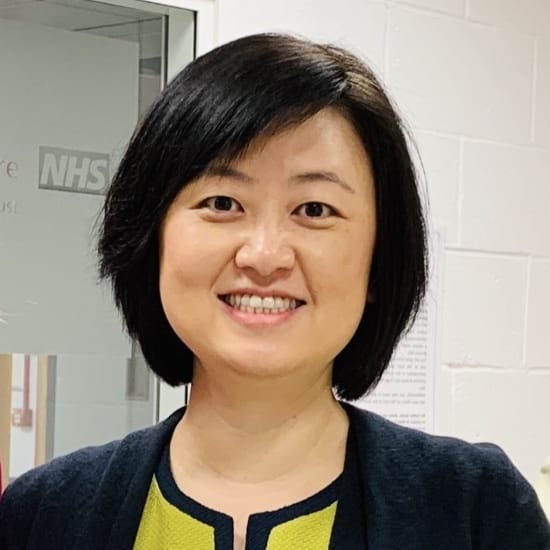
Dr Mimi Z. Chen
Specialist consultant in diabetes and endocrinology with a particular interest in weight loss and weight management medications.

Dr Ling Ling Chuah
Consultant endocrinologist with over a decade’s experience in the treatment of diabetes.

Professor Melanie Davies
Ms Melanie Davies is a consultant obstetrician and gynaecologist and accredited subspecialist in reproductive medicine, treating ages of 14 and upwards.

Dr David Hopkins
Consultant physician and diabetologist with a particular clinical interests in insulin pump therapy and management of advanced diabetes complications.

Mr Vikram Talaulikar
Associate specialist at UCL with clinical interests that include reproductive endocrinology, PMOS, fertility, recurrent miscarriage, premature menopause.
Learn more about abnormal growth disorders
Our world-leading endocrinologists provide expert insight on the understanding and treatment of growth disorders. .

HRT myths busted!

Spotlight on paediatric endocrinology

Speak to a member of our team

Get in touch
If you have any questions or want to book an appointment, please speak to our team on +44 (0)800 0483 330.
Or, make an enquiry online using this form and one of our team will be in touch. Please note, all the information collected is required as part of our registration process. By using this form you agree with the storage and handling of your data by our team. You don't need a referral from your GP to make an appointment with us.
Contact us
Our team can also be contacted on +44 (0)800 0483 330.
Please note, all the information collected is required as part of our registration process. By using this form, you agree with the storage and handling of your data by our team.